The Age of Man
July 24, 2023 · Personal
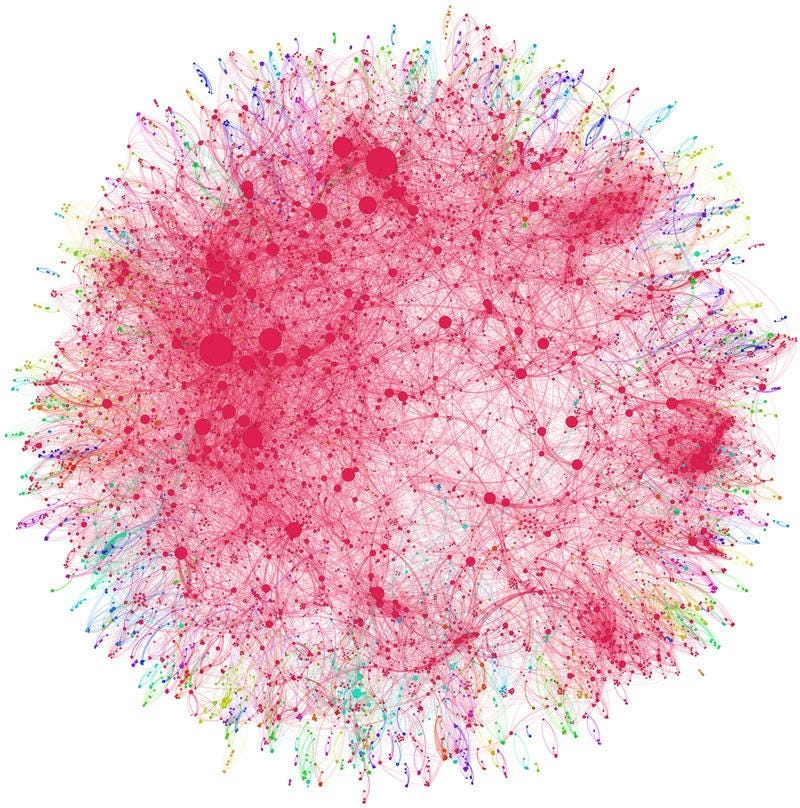
The age of man is over. No, I do not mean that we are going to be replaced by AI-driven life forms or we have reached a level that AI technology is so advanced that it poses a threat. I think that we are not close to this reality. But, we are closing to the time, that the complexity of the required computation will begin surpass our capabilities forever.
Lets just be analytical
When you study computer science, or a similar degree, there are several standard things you are taught; algorithms, data structures, complexity, information theory etc.
These teach you one specific thing; how to put chaos in order. Actually, how to get a really complex system and tame it, line by line. You are taught, to understand, which line is slow in terms of execution and how to improve it.
Then you learn abstractions. Object-oriented programming and multi-paradigm languages. Everything you learn, aims to better at understanding complexity and eventually tame it.
One simple trick
But how can we be sure that we can beat it? It is simple really. You create subsystems that can are communicating with each other by simple ways. Then you can create cluster of subsystems that communicate with each other.
This is the method we followed, to go from a simple 2 or 3-tier architecture, to the micro-service revolution (that made the cloud companies so profitable, but this opinion will be analysed on another post :) ).
To tame a system
So … what is the most complex system that you can understand or design? Depends on its abstractions? But where does this end? Is there a barrier that we can never cross? I think yeah.
And with what you end up? With a system of limited to none ownership. Nobody knows exactly how it works.
Is there an alternative?
Yes, there is. What if, you don’t have to use all the known analytical methods to create a system? And just program a generic system that would behave the way you want it to behave. All those systems emerge right now that are doing exactly that. They can be trained, in a way that they “work”, but no-one knows really why. But they seem to work, at least on lots of cases.
Machine learning and foundation models
These technologies you can do the trick. With enough data, you create a series of probabilities in a system, that usually work for you. And I say usually, because they can always fail, if you take the wrong turn. These things happen. But most of the times, it will work.
Imagine a system that is trained to work on computer vision, to identify a specific item or shape. It is quite impossible to create a program to do this, with whatever analytical method.
This happens also with foundation models, like LLMs and their realisations with products like ChatGPT. These are trained with wast amount of data and can do magical things. The problem is, nobody knows why.
No, they are not intelligent, they just do “next-word prediction”, but it works. And they work in a way, no human could every write a program that can mimic them.
Meta-programming at another level
Meta-programming is a paradigm widely used on software engineering, and it is a program that generates another program, which is later on compiled and executed in machine code. The most infamous system that uses meta-programming is C++ templates.
Imagine that we have all those AI technologies that can generate programs for us, or models that can be executed. It is meta-programming at scale.
The loss of control
But you win something, you lose something. This is the naked truth. Can anyone explain, or at least prove, in an analytical way, why ChatGPT is so great? No.
But it works, so we lost control of the subsystem, clearly. And soon lots of them will follow. No-one will be able to explain why those systems performing the tasks, we ask from them, but at the same time, no-one will be able to predict or fix them, if they do not work. There will be “prompt engineers” that will know the right combination of words to produce desired output, but those combinations will change each time the basic model is re-trained.
Epilogue
So, the age of man, begins to come to its end. We are constantly adding systems to the mix that we do not really know, if they work, or when they will not work. They want adult supervision all the time.
Sadly, the human intellect, cannot be narrowed down into sets of probabilities. Products like ChatGPT will become a commodity and the way we are producing content and communicate with computers, will change forever. Actually, it has already changed.