Integer Class, auto-boxing and Caching
July 1, 2024 · Programming
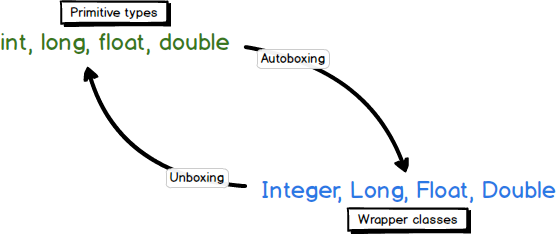
Today, i decided to search a little the latest j2sdk sources. My initial search began with the usage of final modifier in the signature of a method. What is its exact usage, etc.
I wrote some sample programs and decompiled them, finding nothing of interest. Then i tried to investigate auto-boxing. I wrote a sample program that calls a method that has an Integer class as parameter. Something like that:
public void bar(Integer i) { ... }

int i = 1;
System.out.println(i);
When i used auto-boxing, the compiler used the Integer.valueOf(int) method. So i started searching if it is more optimized to use auto-boxing, or not.
When i changed the i variable to Integer type, and called normally the constructor of the Integer class, i realized that the constructor was invoked normally, with int as parameter.
The mystery solved when i read the original Integer class sources.
The contructor simply instantiates a new Integer object. On the other hand, the Integer.valueOf(int) does the following:
public static Integer valueOf(int i) {pre
	final int offset = 128;
	if (i >= -128 && i <= 127) { // must cache
		return IntegerCache.cache[i + offset];
	}

	return new Integer(i);
}
The valueOf method uses an cache object and keeps 256 integers cached all the time. The pre for the integer cache follows:
private static class IntegerCache {
	private IntegerCache(){}

	static final Integer cache[] = new Integer[-(-128) + 127 + 1];

	static {
		for(int i = 0; i < cache.length; i++)
			cache[i] = new Integer(i - 128);
	}
}
So, if you use auto-boxing (or simply use the Integer.valueOf() method) instead of the normal constructor, you get a cached integer reference instead of a new object. This is an documented feature (see the Integer.valueOf(int) javadoc entry), and is demostrated by the following code.
public class Foo {
	public static void main(String[] args) {
		Integer i = new Integer(10);
		Integer ii = new Integer(10);
		Integer iii = Integer.valueOf(10);
		Integer iiii = Integer.valueOf(10);

		System.out.println("i == ii - " + (i == ii));
		System.out.println("ii == iii - " + (ii == iii));
		System.out.println("iii = i - " +  (i == iii));
		System.out.println("iiii = iii - " + (iiii == iii));
	}
}
Sample executiion output follows:
bkarak$ java Foo
i == ii - false
ii == iii - false
iii = i - false
iiii = iii - true
But the caching works only with the Integer.valueOf(int) method. See the implementation of the Integer.valueOf(String,int) for example:
public static Integer valueOf(String s, int radix)
	throws NumberFormatException {
		return new Integer(parseInt(s,radix));
}
This method always returns a new Integer object. Doh!