Compile-time optimization with final keyword in Java
July 3, 2024 · Programming
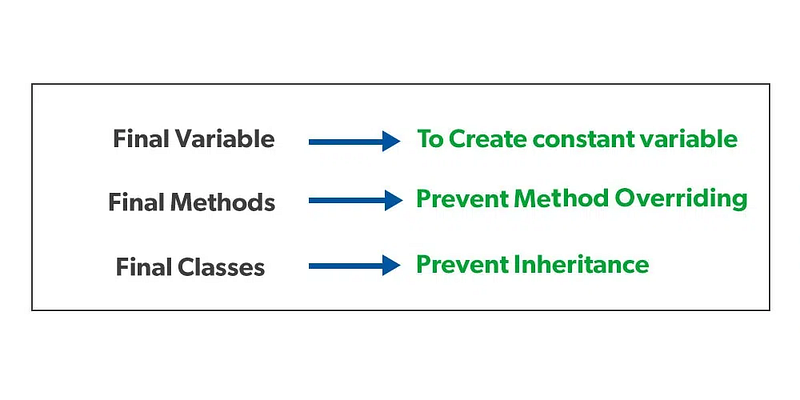
Recently i noticed that the final keyword in Java can be used inside a method body. I was interested about the compiler’s behavior regarding this issue. So i i wrote the following program:
public class Test {
        public static void main(String[] args) {
                int i = 10;

                System.out.println(i);
        }
}
I compiled it and decompiled the produced class
javap -c Test
Compiled from "Test.java"
public class Test extends java.lang.Object{
public Test();
  Code:
   0:   aload_0
   1:   invokespecial   #1; //Method java/lang/Object."":()V
   4:   return

public static void main(java.lang.String[]);
  Code:
   0:   bipush  10
   2:   istore_1
   3:   getstatic       #2; //Field java/lang/System.out:Ljava/io/PrintStream;
   6:   iload_1
   7:   invokevirtual   #3; //Method java/io/PrintStream.println:(I)V
   10:  return
}
So far all are ok … just a program that prints out the number 10 after one assignment. I modified the program, and used the final keyword in the declaration of the variable i.
public class Test {
        public static void main(String[] args) {
                final int i = 10;

                System.out.println(i);
        }
}
The generated code is the following
javap -c Test
Compiled from "Test.java"
public class Test extends java.lang.Object{
public Test();
  Code:
   0:   aload_0
   1:   invokespecial   #1; //Method java/lang/Object."<init>":()V
   4:   return

public static void main(java.lang.String[]);
  Code:
   0:   getstatic       #2; //Field java/lang/System.out:Ljava/io/PrintStream;
   3:   bipush  10
   5:   invokevirtual   #3; //Method java/io/PrintStream.println:(I)V
   8:   return
}
As we can see in the first case the variable i was stored in the method’s local variable area using the istore_1 and the iload_1 commands. In the second case these were ommited and the value 10 was inlined. I think it is typical for the final keyword to trigger this kind of optimization from the compiler. I am curious what happens in more complex cases. :)